-
![Alpakawolle waschen]()
1. WASH HANDS
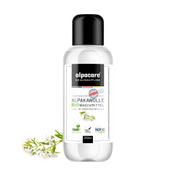
Wool is sensitive to excessively high temperatures or extreme temperature fluctuations. The water should be lukewarm at most. Mix it with a wool detergent. We recommend Alpacare detergent exclusively for alpaca wool. Once you have placed the knitted item in the water, the fibers must become completely saturated with the water and detergent.
Fabric softener damages the wool, as the fibers become matted. -
![Alpakawolle waschen Icon Kein Rubbeln, kein Wringen]()
2. WASH CORRECTLY
Gently move the knitted item through the water as if you were bathing a baby, so that all dirt particles are washed out. Do not rub the wool, as the soft fibers will otherwise be damaged. No scrubbing, no wringing!
Also always ensure a constant water temperature when rinsing, so that the delicate fibers do not felt. Wool hates temperature fluctuations.
Rinse the knitted item long enough to ensure that the Alpacare detergent is also rinsed out of the fibers. -
![Alpakawolle waschen drücke es
sanft aus]()
3. SQUEEZE OUT
Carefully lift your knitted item out of the rinse with both hands from underneath so that nothing hangs down, and gently press it out. Then spread it loosely on a prepared towel and roll the item up in the towel. Now you can squeeze out the excess water. This will be absorbed by the towel. Before the knitted item is protected by the towel, you must never wring or press it vigorously, as you could damage the fibers.
-
![Alpakawolle Waschen Icon nie zum Trocknen aufhängen]()
4. DRY PROPERLY
Place your knitted item on a large towel and spread it out on the drying rack so that it does not hang down between the bars. You should never hang clothes made of alpaca wool to dry, as this causes stretching and unsightly bumps. Never put your knitted items in the tumble dryer—unless you deliberately want to felt them.
-
![Alpakawolle waschen Icon mit Dampf bügeln]()
5. STEAM IRON
In most cases, you do not need to iron your knitted item. It retains its shape when laid flat to dry and does not wrinkle. If the ribbing rolls up, you can carefully steam it with a damp cloth placed in between. It is best to use a gauge swatch to check whether the wool loses its tension when steamed with an iron.


-
![]()
1. AIRTIGHT CONTAINERS
-
Boxes or containers: Use airtight plastic or metal boxes or containers. These prevent
moths from getting to the wool.
- Glass jars: Glass jars are also a good option, as they are transparent and allow you to keep an eye on the condition of the wool.
-
Boxes or containers: Use airtight plastic or metal boxes or containers. These prevent
-
![]()
2. NATURAL REPELLENTS
-
Lavender: Place dried lavender blossoms or lavender sachets in the containers. The scent keeps moths away.
-
Cedarwood: Cedarwood chips or small cedarwood blocks have a similar effect.
- Herbs: Other herbs such as rosemary or thyme can also act as a deterrent to moths.
-
Lavender: Place dried lavender blossoms or lavender sachets in the containers. The scent keeps moths away.
-
![]()
3. STORE IN A DRY PLACE
-
Dark place: Choose a cool, dark place for storage, such as a cabinet or chest of drawers.
- No moisture: Moisture promotes mold growth. Make sure the storage area is dry.
-
Dark place: Choose a cool, dark place for storage, such as a cabinet or chest of drawers.
-
![]()
4. REGULAR MONITORING
-
Inspection: Regularly check your wool supplies for signs of moth infestation.
- Cleaning: Clean the containers as needed to remove dust and dirt.
-
Inspection: Regularly check your wool supplies for signs of moth infestation.
-
![]()
5. FREEZE
- In case of infestation: If you find an infestation, you can freeze the wool for a few days. This kills the moths and their eggs.


alpacare® organic alpaca wool detergent 250ml is backordered and will ship as soon as it is back in stock.